Connecting real time factory operations with scalable cloud analytics through research driven UX.
Role: Product Designer · Scope: Monitoring · Analytics · Traceability · Tools: Figma · Prototyping · Field Research
Context
Bright Machines builds automation software that connects robotics, production data, and cloud analytics to optimize manufacturing lines.
This case study highlights how we designed a unified experience across two environments: machine operator interfaces (Studio) and cloud based monitoring and analysis tools (Platforms) — supporting multiple roles, hardware setups, and real-time decision-making.
Key challenges
Extreme environments Noisy, low-light production floors, often without keyboard or mouse.
Multiple roles, conflicting needs Operators needed clarity and speed, while engineers needed dense diagnostics and historical trends.
Fragmented visibility Information lived across tools, limiting root-cause investigation.
Scalability The platform needed a consistent UX foundation across apps, screens, and hardware.
Design approach
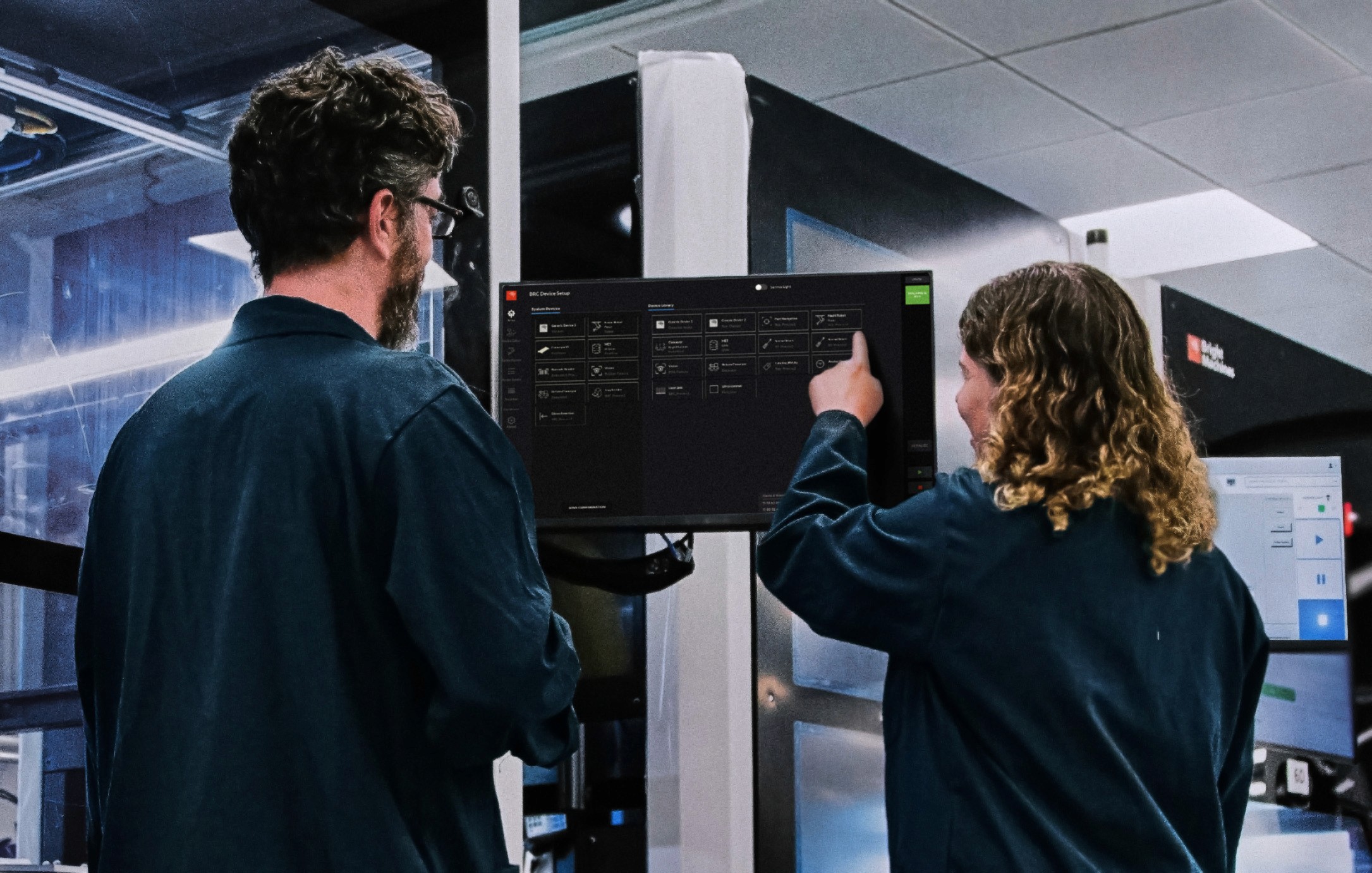
Research in context
Field visits, observations, and interviews to understand real workflows and constraints.
Cross-role system thinking
Mapped how operators, engineers, and managers interact with the same production events differently.
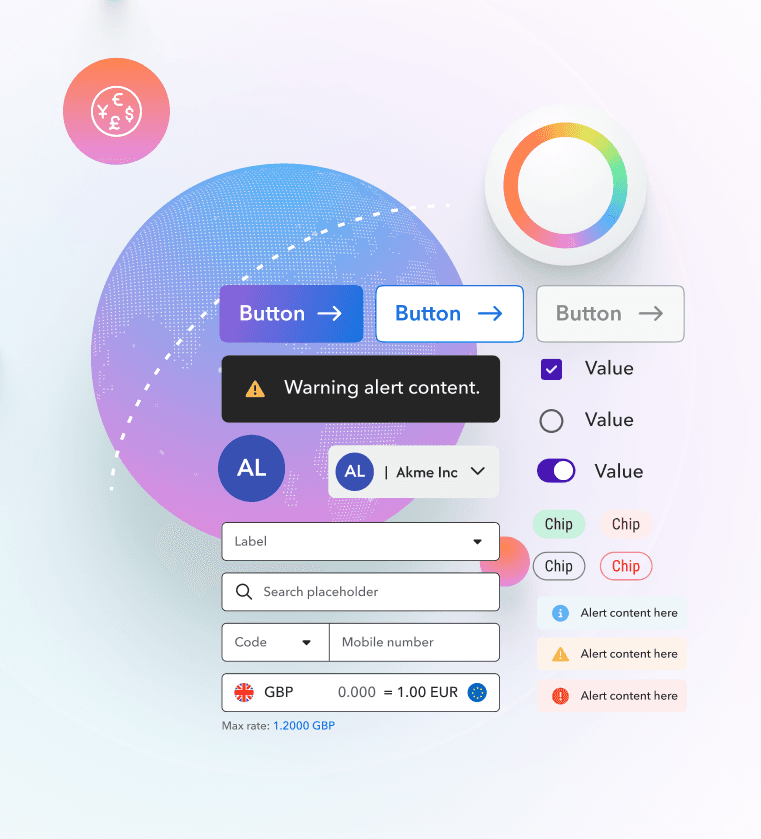
Scalable UI foundation
Designed reusable patterns for monitoring, traceability, and analysis across environments.
Research highlights
We visited a manufacturing site with the full product team to observe workflows, interview real users, and validate assumptions.
The visit revealed a critical gap: early feedback came mainly from stakeholders — not the factory floor users.
What we learned
Operators needed instant status clarity with minimal cognitive load.
Engineers needed traceability + structured investigation paths, not more dashboards.
Managers needed line-level performance trends without technical noise.
Key areas
Three core surfaces connecting real-time operations, investigation, and performance analysis.
From monitoring to performance insights
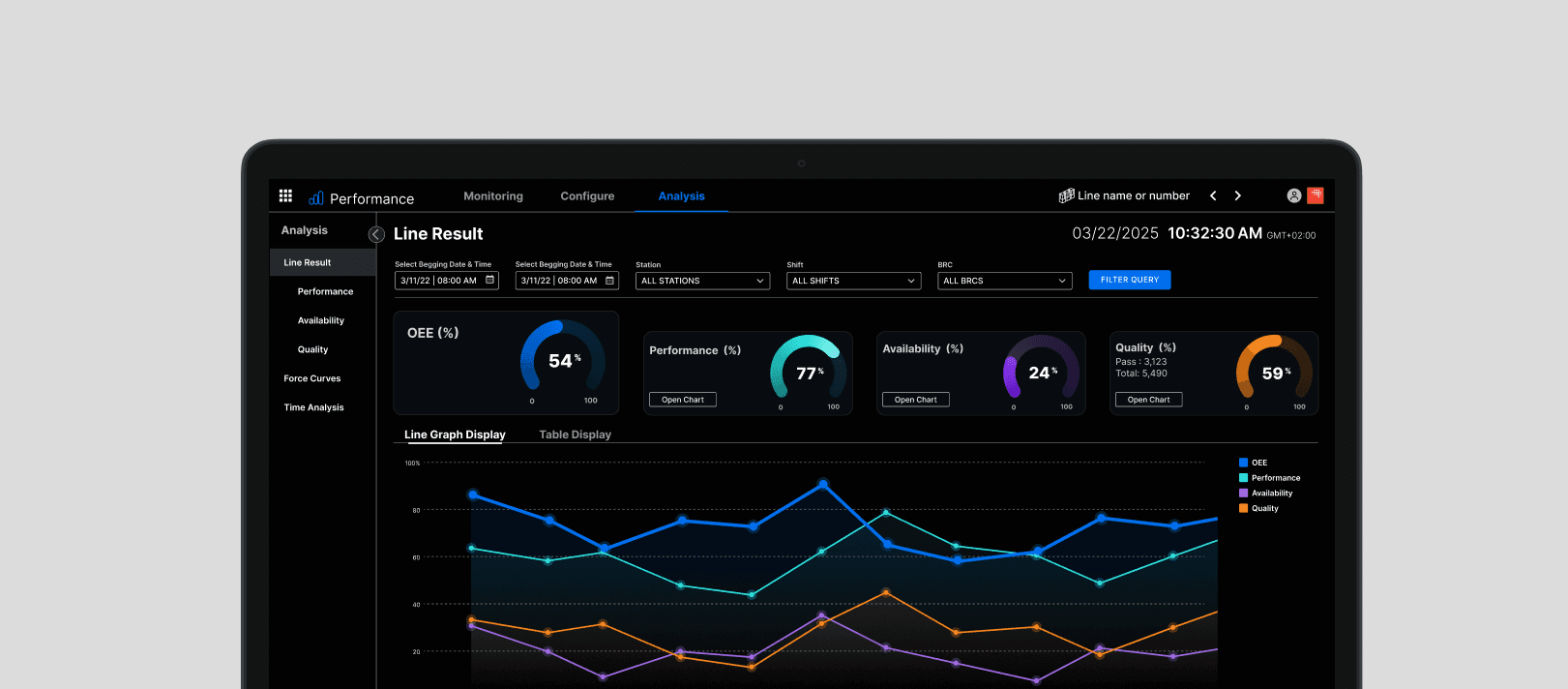
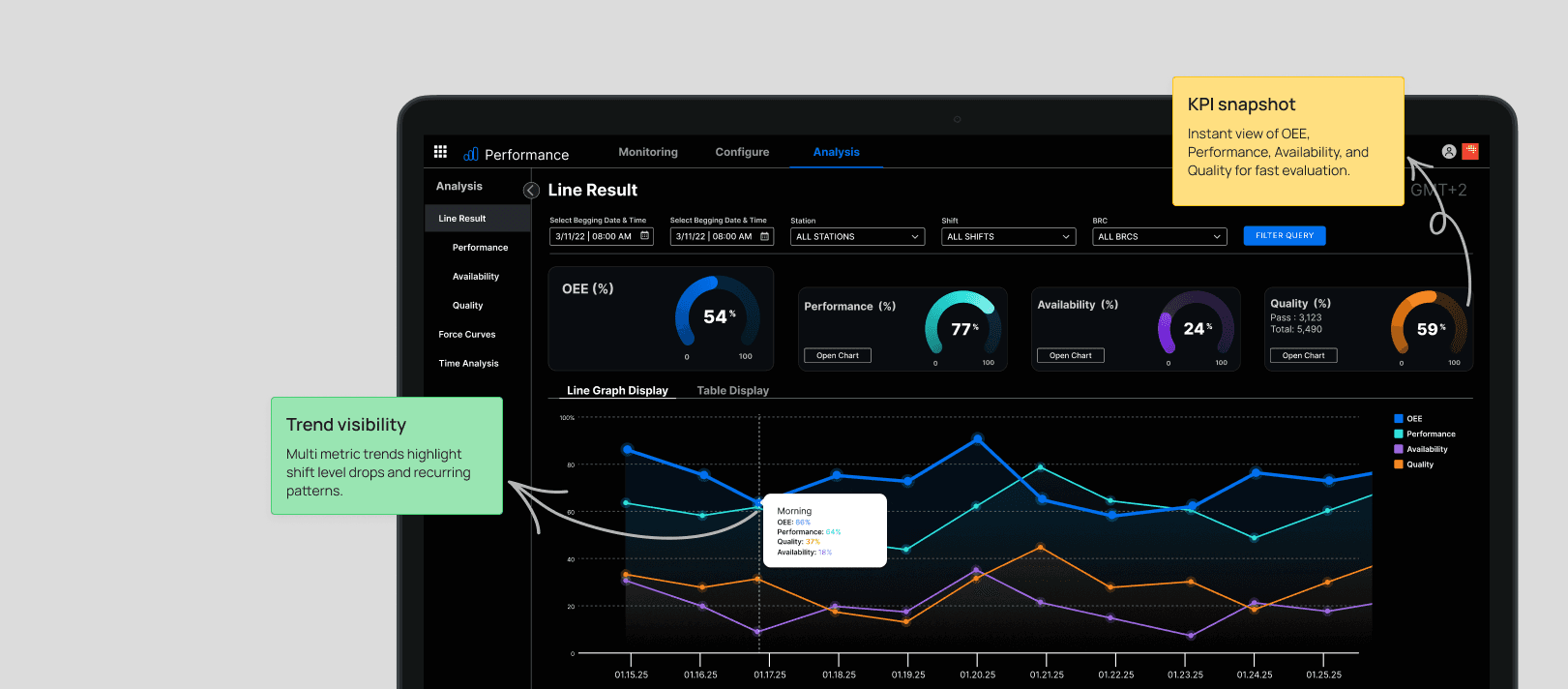
Analysis
Designed to help teams move from alerts to actionable performance analysis, without digging through raw data.
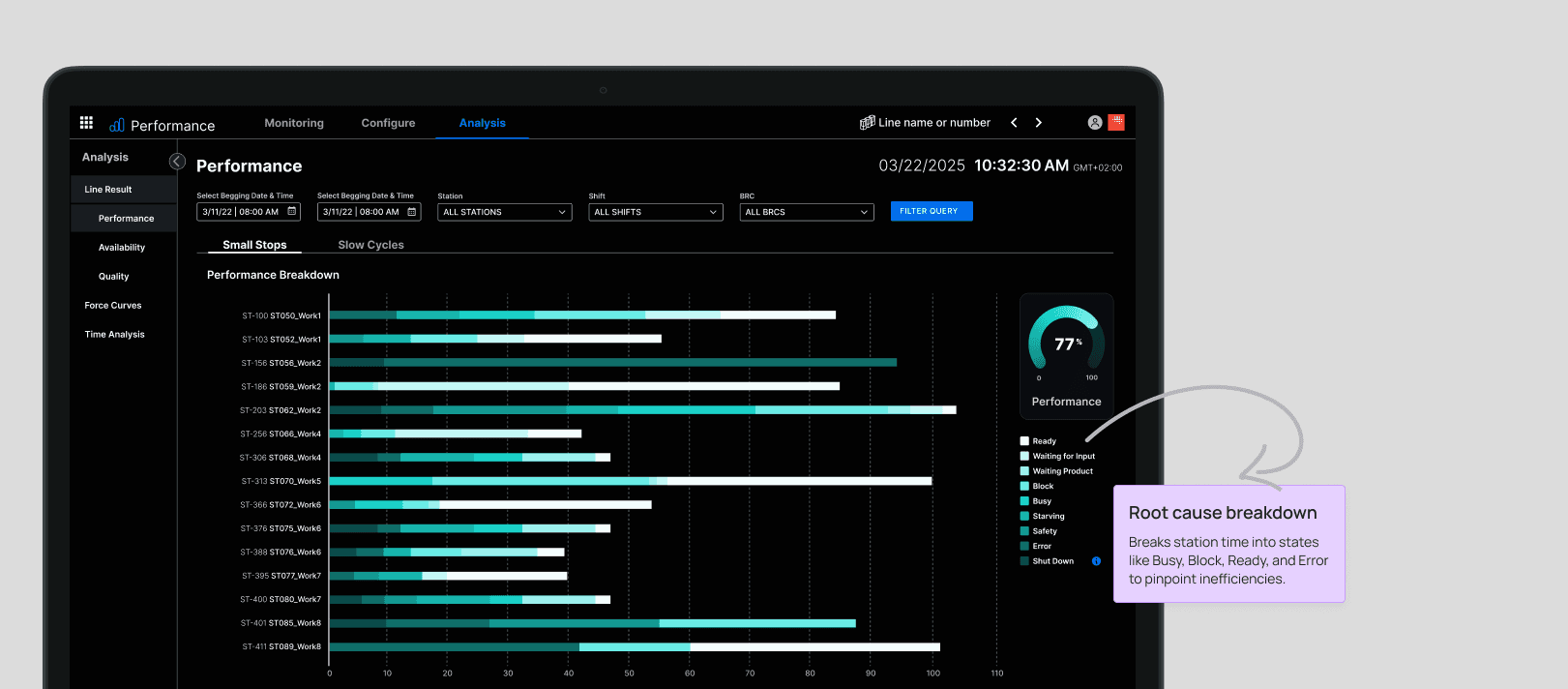
Performance Breakdown
Once issues are visible, users can drill down to understand what caused the loss.
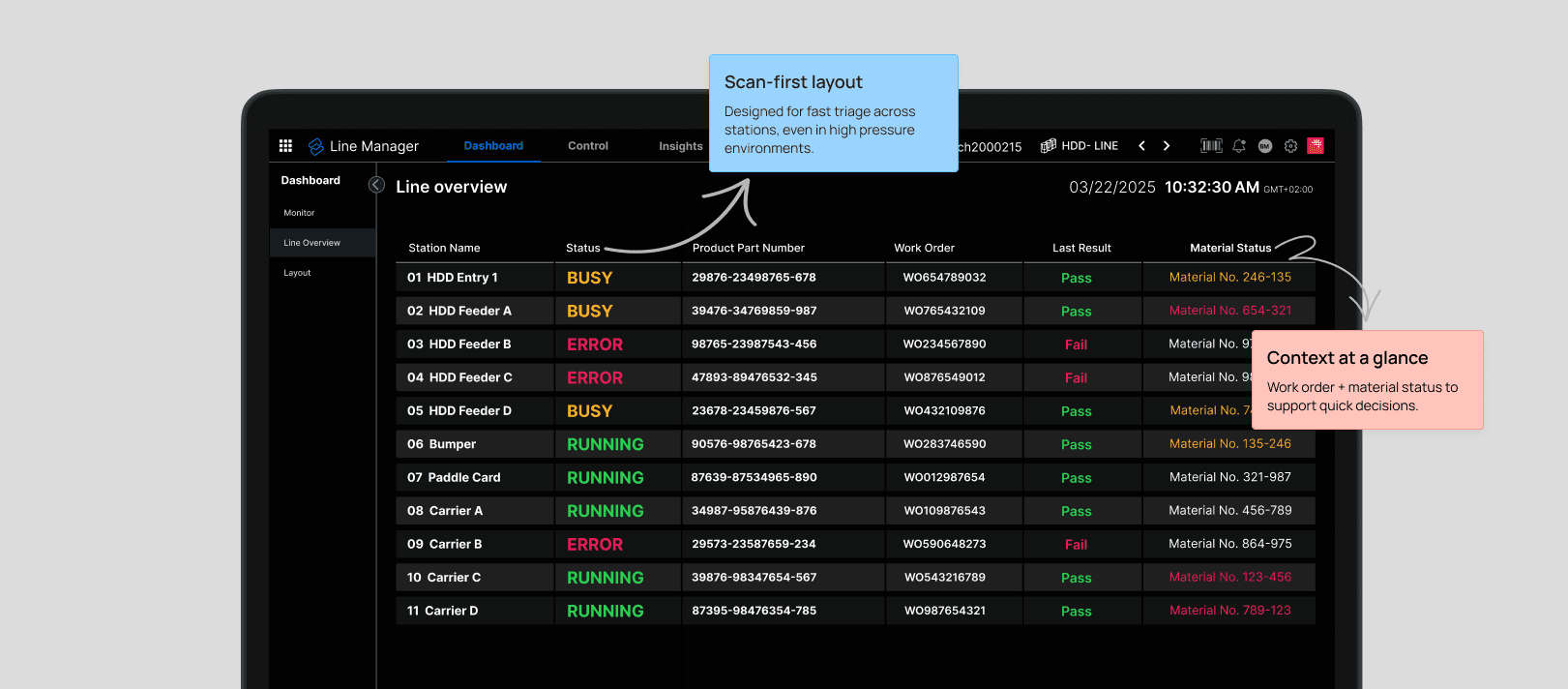
Line Monitoring Overview
A real-time monitoring view for operators and line leads to spot bottlenecks and respond faster. Optimized for fast scanning and factory floor conditions.
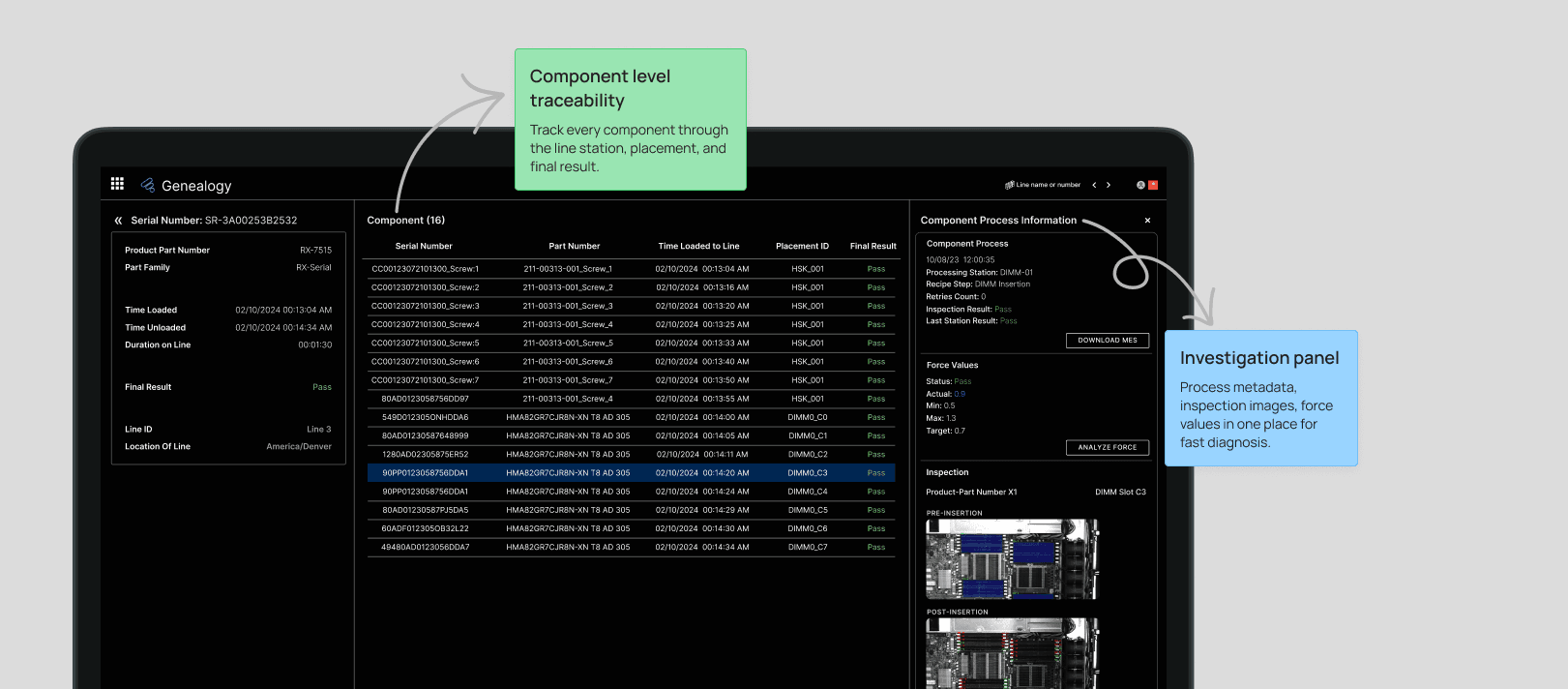
Component genealogy
A traceability view that lets engineers track every component across the line and quickly investigate where failures occurred.
Key decisions
Designed for scanning first. Built layouts that support fast visual parsing and prioritization in high-density factory dashboards.
Translated raw data into actionable signals. Turned performance metrics into clear KPIs, trends, and breakdowns teams could act on.
Kept investigation inside one flow. Connected stations, components, and outcomes to reduce context switching during troubleshooting.
Impact
Visibility. Improved clarity across station status, line health, and performance trends.
Efficiency. Reduced friction in investigation and decision making across roles.
Confidence. Enabled teams to act faster with consistent, system-driven UI patterns.
This helped manufacturing teams detect issues earlier and respond faster, with less ambiguity and fewer handoffs.
More projects